
Hamlet (1996) – Shakespeare Uncut, Cinema Unleashed
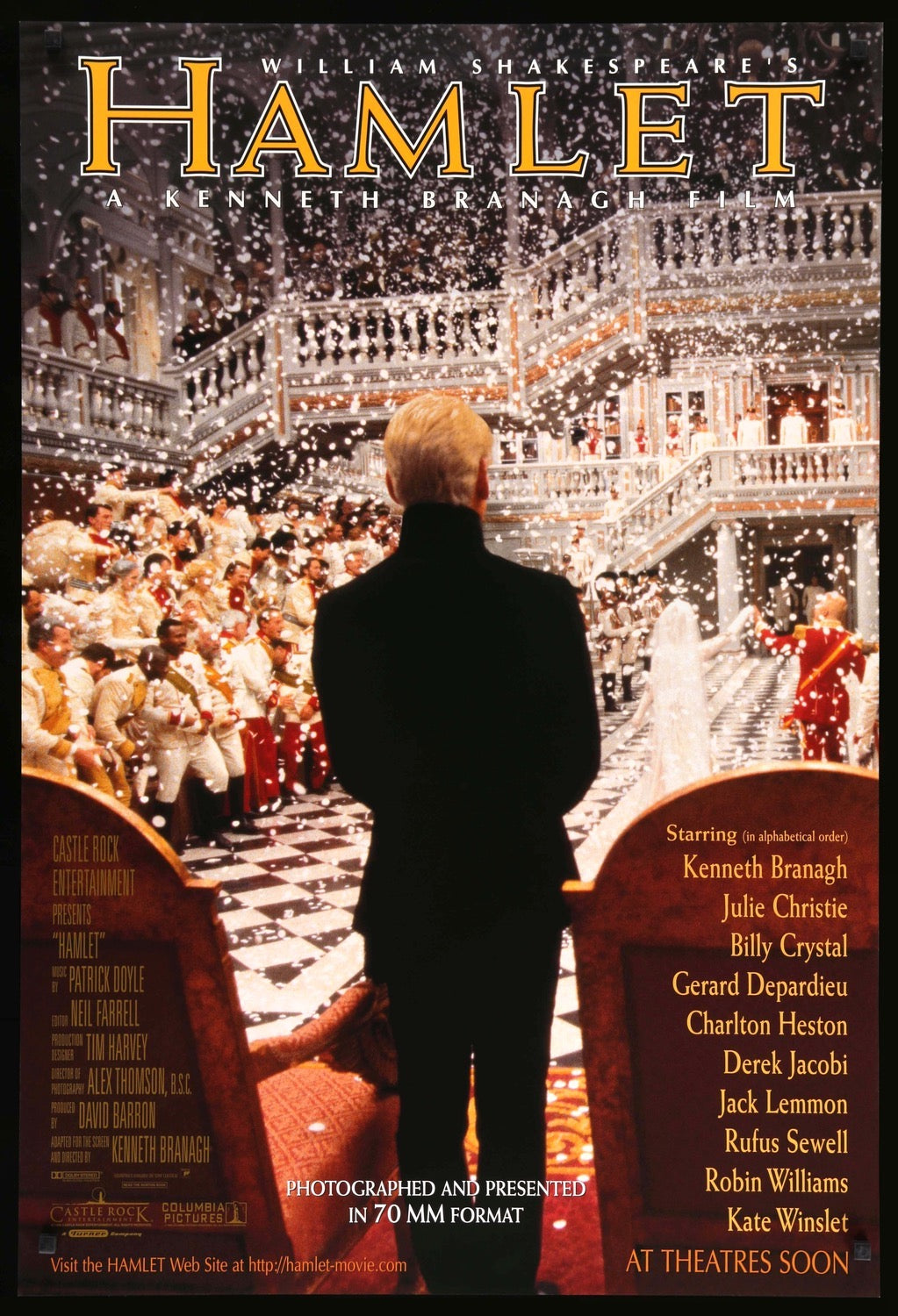
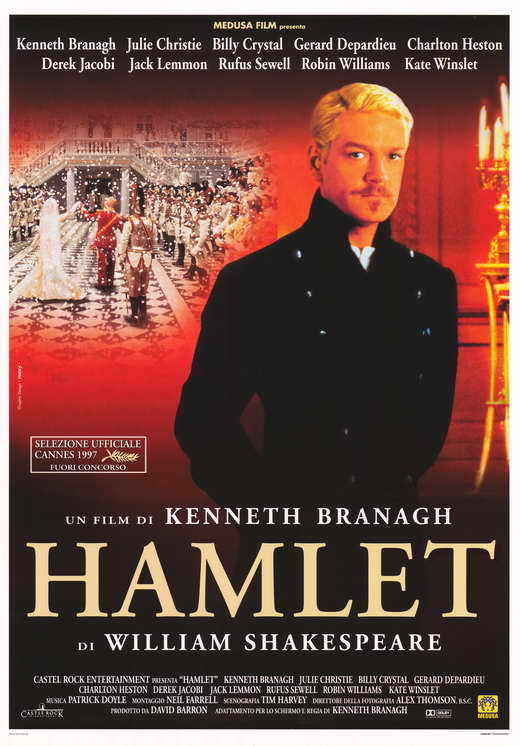
Kenneth Branagh’s Hamlet (1996) is not just an adaptation of Shakespeare’s most famous tragedy—it is a declaration of ambition. Filmed in sweeping 70mm and running a full four hours, this version presents the complete, unabridged text of Hamlet, something no major film had attempted before. The result is grand, exhausting, and often breathtaking.
A Prince Consumed by Thought
Branagh plays Hamlet as a man constantly on the edge—intellectual, furious, sarcastic, and deeply wounded. His performance is intense and theatrical without feeling hollow. This Hamlet thinks too much, feels too deeply, and suffers visibly under the weight of truth. The famous “To be, or not to be” soliloquy, delivered before a hall of mirrors, becomes a confrontation with the self rather than a quiet meditation.


A Royal Cast with Real Weight
The supporting cast reads like a roll call of cinema royalty.
Julie Christie brings warmth and fragility to Queen Gertrude.
Derek Jacobi is chilling as Claudius—polite, controlled, and morally rotten.
Kate Winslet, as Ophelia, delivers one of the most emotionally raw portrayals of the character ever put on screen. Her descent into madness is painful and believable.
Even brief appearances by actors like Charlton Heston and Robin Williams add texture rather than distraction.
Visual Grandeur Meets Psychological Depth
Set in a 19th-century palace inspired by imperial Europe, the film replaces the usual dark, medieval Elsinore with bright halls, mirrors, and vast corridors. This choice is deliberate. The openness contrasts sharply with the secrecy, betrayal, and paranoia eating away at the characters. The camera moves with confidence, and Branagh uses flashbacks to visualize past sins and memories—an effective cinematic tool that helps modern audiences grasp Shakespeare’s emotional subtext.
Length as Strength and Weakness
At four hours, Hamlet (1996) demands patience. Casual viewers may find it overwhelming. But for those willing to commit, the length becomes a strength. Characters breathe. Motivations make sense. Relationships feel earned. This is Shakespeare as written, not trimmed for convenience.
Final Verdict
Hamlet (1996) is bold, excessive, and sincere. It may not be the most accessible version of Hamlet, but it is arguably the most complete and fearless. Branagh doesn’t simplify Shakespeare—he trusts him. And that trust pays off in a film that feels monumental, tragic, and alive with language.
Rating: ★★★★½ / 5



0 Comments